In the Desert

You already know that I learned of Jesus’ love for me and His offer of forgiveness for my sins when I was just eight years old. And you likely know that I would say that despite my age-eight acceptance of His forgiveness, I’d say that I didn’t begin to walk with Him until I was sixteen. Someone may wonder, “What’s the difference?” and I suppose I’d put it this way:

When I say I learned of (and received) Jesus’ forgiveness, I mean that it was a transactional decision. And when I say I began to walk with Jesus, I mean that it was a relational decision.

I wonder if you’ve made that relational decision yet. I pray you have. Not because I’m a pastor or a church-goer or because you think I’m “religious.” I actually don’t put one ounce of value in any of those things. What I want for you is to know the transformational love of the God who created you, knows you, and wants you. Now, let me say more to the point what I mean. I want you to have solid ground to stand on. Apart from Jesus, solid ground doesn’t exist. In Him, you will have peace when the world feels unstable (when does it not?), joy even in times of turmoil or tragedy, hope in the face of the uncertain future, and an abundance of love given directly from God Himself for you, but not just for you–so that it might overflow* through your life to those around you. Inexpressible joy, unwavering peace, boundless hope, and unending love. THAT’S what I want for you, and only Jesus has it because only Jesus IS all those things.

So, do the math. I’m currently fifty-one years old *gulp*, and I started walking with Jesus at age sixteen. Let’s see, that means I’ve walked with him….give me a minute….for thirty-five years.

In those thirty-five years, I can tell you that a large portion of that time has been spent in what some might call a desert land. In my younger understanding of spirituality and my grasp of what it means to walk with Jesus, I would have told you that desert = bad. I mean, deserts are dry, lifeless, exhausting, and there just isn’t much attractive about being in a desert. We’ve all seen some movie where some poor guy is dragging himself on his belly through the desert, breathing this gasping desire… “Water….please…water…”

It’s even found its way into our language as Jesus’ followers. When we share with others about how we are doing spiritually, we use words like “desert”, “stale”, “dry”, and it all means that our spiritual lives are kind of waning; that we aren’t really where we want to be. It’s a season we’re trying to simply survive.

But there’s a scriptural reality that I fear we have not only overlooked but negated in our modern view of desert seasons. I submit to you that not only did Jesus love the desert, and longed for the desert, but practically speaking, the deepest, richest ministry happens in the desert.

What must happen is that we view those “desert” seasons of our lives as seasons of strengthening, intimacy, and preparation. Yet we commonly see them as weakening, distancing, and purposeless.

Look with me at the gospels. Let’s go with Mark, whose gospel account was actually written first. I personally love Mark because he’s just interested in the action of Jesus’ life. His writing focuses far less on the words of Jesus and more on the ways of Jesus. At the start of his account, Mark tells about how John was in the “wilderness” preaching the message of the Kingdom, and that Jesus came out to John to be baptized.

Did you get that? Blink, and you’ll miss it: Jesus went out to the desert to be baptized. God the Father’s public declaration of Jesus’ identity and His public ministry began in the desert. In fact, it’s the only place in scripture where the Trinity is manifest in a publicly perceptible way: The Father’s voice audibly heard from heaven, the Son standing in the river, and the Spirit descending like a dove. What if, instead of lamenting the desert times in our lives, we chose to view them as where new things start?

Not convinced? Look at what happened IMMEDIATELY after Jesus was baptized by John in the Jordan River…. This time let’s look at Matthew’s gospel account…. “Then Jesus was led by the Spirit into the wilderness…” (Matt. 4:1)

What?!? God the Spirit led God the Son into the desert in preparation for the ministry that would ultimately glorify God the Father? Yep. That’s EXACTLY what happened.

So when you find yourself tempted to think that your spiritual desert place is a place of lifelessness, purposelessness, or directionlessness, understand that the desert is where God BEGINS the work. It’s where God PREPARES us for the new chapter. It’s where God PROVES His nearness and faithfulness.

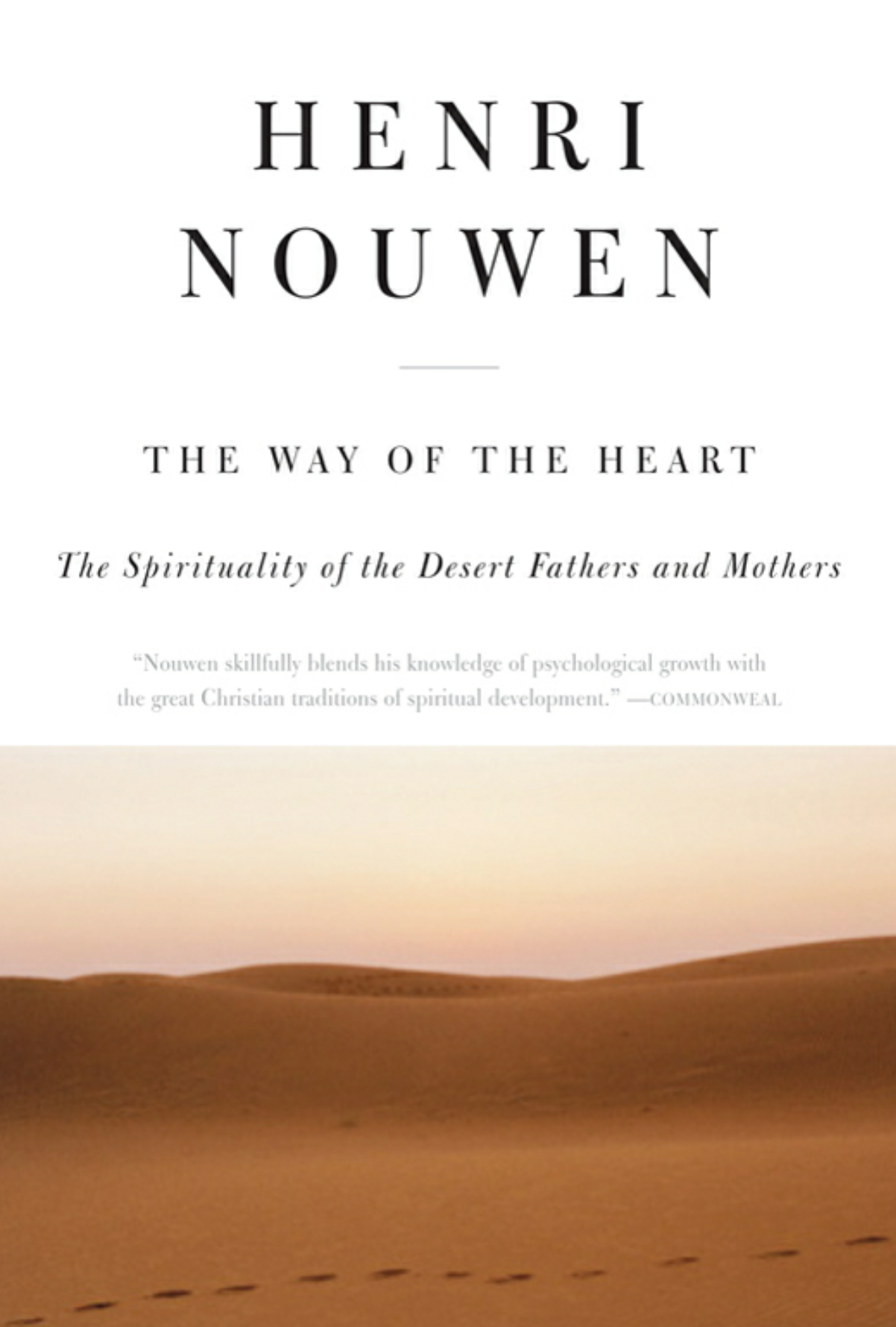
As part of my grad school journey, I read a book by Henri Nouwen called “The Way of the Heart” and it speaks deeply to this whole idea of how we view the desert. I recommend it to you highly. You can order your own copy here.

It is at this point that my heart wants to hit the gas pedal and pour out more content, sharing more of my thoughts about this topic. But my mind says, “Stop here. That’s enough. You want people to read this, right?”

So here I’ll stop and turn to you. What are your thoughts on this? What are your desert-place experiences? Does anything here resonate with you, or prove helpful?

*A couple of years ago, I co-authored a devotional book called “Overflow”. If you’d like a copy of that 52-week devotional book, please reach out and let me know. I’d be happy to send you one of the few copies I have left.

Connections Matter

“To lead is to serve.”

That’s the mantra of a group of young people I’m privileged to walk with. This particular group is called “Crew” and it’s our student leadership team. The goal of this team is not to manufacture pastors or full-time ministry leaders but rather to create a sense of ownership and urgency in terms of mission. What’s the mission? Simple. To “make disciples.”

Jesus is the one-stop shop for all things leadership, servanthood, visioning, planning, time management, personal growth, team-building, and organizational structuring, to name a few. You need not look any further than the person of Jesus Christ and His 33 years on earth if you want to learn anything in any of the areas above.

I’m a chronic evaluator. I’ve never been able to leave things alone that could potentially be improved. Sometimes, creating from nothing is involved in that, but most times, it’s taking what already is and asking, “How could this be even better?” And sometimes “better” comes in the form of taking an approach, a paradigm, or an established methodology, tying it to the nearest tree, and putting a bullet in its head. Metaphorically speaking, of course.

Because I’m constantly evaluating and seldom (if ever) fully satisfied, my mind is continually spinning and working on what-ifs, what-nows, and why-nots? I don’t suppose I’m unique in this; I bet you have a fair measure of evaluative DNA in your bones as well.

One of the assessments I’m trying to make right now is to evaluate how emotionally supportive and personally accessible I am. I didn’t wake up with those two areas of growth in my mental crosshairs, but as I’ve thought about it, they have emerged as two possible areas I could do some work in.

I’ve often said that self-awareness is a superpower. It’s one of those things you notice more when it’s absent than when it’s present. For example, my wife and I drove out to the middle of nowhere to a small country furniture store that sold Amish-quality (if you know, you know) furniture, and it was also a deli of sorts that reportedly piled the lunch meats high on their freshly made bread. We didn’t go for the furniture.

While waiting for our sandwiches to be assembled by bonnet-wearing, long-dress-adorned women, another customer approached us to tell a joke. I’m not kidding. No warning. No “I’m about to tell you a joke” disclaimer. No preparation. She just hit us with this quip that she considered amusing.

Have you ever had to make a decision that, in the face of sheer awkwardness, you’re going to just go with it and try and endure with a smile on your face? That was us. Her joke was understandable, but it just wasn’t funny. It was on par with a really bad “dad joke.” We responded with the appropriate amount of sympathy laugh, trailed off with the well-known “after-laugh” sigh that kind of trails off, letting the jokemaker know that their joke was…ummm….over.

Undaunted and clearly unaware of our discomfort, she doubled down with another joke. A swing and a miss. Strike two.

Then, to my horror, she pulls out her third attempt. I wish I could tell you what it was, but it was so bad that my mind instantly protected itself by erasing the memory of that joke.

One thing I can say for this sweet lady was that she was gleefully unaware of the situation as we saw it. She was just doing what she did: cracking jokes and taking names. Yep. Self-awareness is a superpower. And you know it best when it’s absent.

So, all that to say, I want to be self-aware. Sorry, that deli story was the “long way around the barn” as my dad would say. Still, I want to be in tune with areas of growth that present themselves.

I wonder how well or poorly I’ve actually done in these two areas. The areas of support and accessibility, in particular, are, for whatever reason, the two areas that are in front of me right now. I won’t share the details, but I can look back on different situations where I have been either accidentally unsupportive or inadvertently inaccessible.

I titled this blog post as I did because I really do believe that. At the end of the day, it really is connections that matter most. First, I want to be connected to Jesus. And by connected, I mean abiding deeply in who He is, how He loves, and where He’s going. (John 15:4-11) The youthful desire I once had to just “get stuff done” has been slowly replaced by a desire to “keep Jesus close.” I’ve learned over the years that getting stuff done without keeping Jesus close is worth exactly nothing. (Psalm 127:1) I know that’s a harsh statement. But it’s not less true because it’s difficult to hear.

One of the things I love about this young generation is their apparent desire to connect more than accomplish. God bless previous generations and their dogged determination to grind at all costs, and I don’t mean to say that Gen Z or Alpha or even Millenials aren’t hard workers. They most assuredly are. But what is of equal or greater value seems to be connecting well while they also do the stuff on their to-do lists. It’s the beautiful understanding that the program is the vehicle, but the person holds the value.

So, how do I make better connections? How do I increase my accessibility? I have taken steps in that direction and have seen some traction. But what must be in place is the intentional steps of seeing what is lacking or needing strengthening, swallowing your pride, and seeking out ways to improve upon it.

Here’s one thing I’m doing. It’s so simple that I’m sure millions of others have already figured this out and applied this to their daily lives. Since I want my life to be marked by JOY, and since I’m a sucker for acrostics, I’m seeking to live each day with these three things at the forefront of my interactions and connections:

J – Jesus. Jesus is my best friend, my King, my healer, my grace-giver, my companion, and my Lord to name just a few. Because of the love relationship I have with Him, I am guided in all ways to love and to serve as He loves and serves. He enables me by the power of His own Spirit to do that; it is none of me and all of Him.

O – Others. If you know me personally or if we’ve ever even had just one interaction, I hope and pray that I gave you attention, showed you respect, and dignified you as a beloved creation of God. I hope that when we talked, you felt heard, understood, seen, and even embraced. If I fell short of that, I apologize. Let’s try again. I drink coffee every day and eat lunch every day. I’d love to do either of those with you.

Y – You. This one’s interesting because John clearly taught us that “I must decrease, and He [Jesus] must increase.” (John 3:30). So it stands to reason that the less of me there is, the more of Jesus there is. But then again, Jesus Himself taught us to “Love your neighbor AS YOU LOVE YOURSELF.” (Mark 12:31) Do these two principles (me decreasing and me loving myself) conflict with each other? I don’t think so. We must have a God-view of ourselves just as we do of others. One prayer I regularly pray is “God help me to see and love people as you see and love them.” But I’ll confess to you that I do not pray that prayer to include myself when, in actuality, I should. “God, help me to see myself as you see me” is a prayer that I need to put into practice.

What connections are most important in your life? How could they possibly be stronger?

What other areas of your life are you evaluating and strengthening?

Leave some thoughts in the comments.

Three Words.

I’ve been thinking lately about systematized spiritual growth. For much of my years on earth walking with Jesus, I’d have preferred to look at our relationship as 100% organic, free-flowing, and even undefinable. After all, if what we’ve got here is a love relationship, not only can it NOT be measured; it SHOULDN’T be measured. Doesn’t seeking to apply a metric to a love affair automatically take away the cache’, the soul of it all, and the essence of what a relationship is in the first place? So I thought.

What would happen to your thoughts if I asked you to qualify your most important relationship? What would you start thinking if I required you to prove empirically that what you say you have in that relationship is what you actually have? Where would you begin? What measuring stick would you use? I believe most of us would point to our actions as qualifiers of our affections, wouldn’t we? I believe most of us would start listing the things we DO as evidence for how we FEEL. If I say to you, “I’m in love with my wife” and you reply with, “Prove it.” then I’d probably start to tell you all the things I attempt to do on the practical level; visible, outward signs that I actually AM in love with my wife. (I am, by the way.)

Can we put such measures on our spiritual health? Does action always equal affection? Of course not. But I do believe that affection always leads us to action.

I was visiting a friend in the hospital the other day. I pushed the elevator’s “up” button from the first-floor lobby and waited for the *ding* that indicated my ride had arrived. While waiting there, a young woman with a child stood nearby, presumably waiting for the same elevator. *DING* The metal doors slid open and we all stepped in. The doors slid closed. There’s that awkward, almost heavy-ish silence in elevators with strangers, right? We had several floors to ascend, so this silence would be a little bit longer than usual. Then suddenly, the silence was shattered: “WHO ARE YOU?!?” The young boy, I’m guessing 6 or 7 years old had boisterously broken that awkward silence with a straight-forward, yet equally awkward question, given the context we were in.

Always a fan of the assertive and wanting to reward him with a reply, I turned my whole body toward him to show him I was fully engaged and ready to answer his question. “My name is Jerry. I’m a pastor and I’m here to visit a teenager I know who’s here in the hospital. What’s your name?” The mom, slightly aghast of the friendly outburst her son just filled the elevator with quickly and sternly corrected him, trying to use it as a training moment on how to introduce yourself to someone. Sadly, that training went mobile as the doors opened and they walked out of that elevator. I never got my answer on who that kid was. But I could tell we’d have had a great chat, given more time.

Since then, his question has hung in my mind like an elevator between floors.

I don’t suppose he meant it existentially. I think he probably saw a man (me), didn’t know that man’s name, and very practically went about the business of finding out. Good for him. But still, the question is more than that. Much more, in fact.

Let me disappoint you here and tell you that I’m not going to unpack all there is to unpack in this one single blog post. So please revisit to travel with me on this stroll. Or as I’ve invited you previously, you can email me or text me. I’m fine with either. Here’s the thought I’m thinking and trying to move forward in terms of systematized spiritual growth and health: The life of one who embraces their own spiritual journey will ultimately travel this continuum:

“Who am I?” —————————————————————————“Here am I.”

I’d submit to you that every living and thinking human on this dust ball speck that’s hurdling at a speed of 67,000 mph through the universe is, at some point earlier than later thinking that question on some level: “Who am I?” Or to break it down a bit more, we could ask accompanying questions like, “What makes me tick?”, “What are my passions?”, “What am I about?”, “What does/should my life look like?”, “Where is my value?”, “Who are my people?”, and even “Do I like me?” All these questions and more float through our conscious and subconscious continually; until they are satisfied(ish).

The shortcut I’d like to give anyone who’d like to take it is that the question “Who am I?” cannot possibly be answered apart from acknowledging some level of Other-ness. What I mean is that you’ll never find a suitable or satisfactory answer to that question inside yourself. No offense. It’s just not possible. And here’s more bad news. If you’re someone who has spun the Wheel of Origin and landed on “Humans are accidental beings results from millions and billions of years of evolution”…well…then….I got nothing for you. But I do tip my hat on the amount of faith you’re displaying in believing that drivel. Again, no offense.

That Other-ness must–hear me–it MUST acknowledge a cause outside yourself. More to the point, it MUST acknowledge a Creator. You’ll never ever find out the answer to “Who am I?” apart from embracing that you’re not your own. If this is where you slam this website shut in disgust, then so be it.

The rest of your spiritual walk will (and should) lead you ultimately to where the prophet Isaiah ended up in chapter six of his now-famous book. Isaiah is known as the “messianic” prophet because of his mile-long list of prophecies about Jesus some 700 years or so before Jesus’ birth. Read Isaiah 6. Look at the conclusion this prophet comes to after experiencing the full majesty of the King and Creator. Knowing precisely now who he was, Isaiah rightfully came to the only conclusion any of us can reach: “Here am I.” (Isaiah 6:8). I’m not a tattoo guy, but man that verse sums up the greatest posture any human can take in terms of spiritual vitality, passion, and mission.

So I told you I don’t have all this nailed down or packaged up, but I am going to think deeply and intentionally about what it looks like to help people move from “Who am I?” to “Here am I.” After all, these two coordinates on the map of spiritual growth represent two very distinct places we find ourselves. And in full disclosure, I’ve been at both points. Currently, my daily mindset starts with “Here am I” and goes from there because I know that since I’m breathing the work isn’t done. It’s good work and it’s God’s work and that’s what I want MY life to be about. I learned at the age of 16 the answer to the question “Who am I?” and now at the age of 50, I get to live a “Here am I” life. And in case I haven’t bee clear, I fully recommend it.

As always, I love to hear from those who read my blog (Hi, Mom!). Feel free to leave a comment. And realize this one isn’t over. Not by a long shot.