Let’s Ride: An open letter to the Church

Just down the street from where I live sits a car with a flat tire. It’s been months just sitting there. Maybe a year. And every time I pass it, I can’t help but wonder why they don’t fix the flat. This seems to be an otherwise fine car that could be taking people here and there. But instead, it sits sadly idle.

That’s the imagery I’m using today as I speak to any and all who consider themselves part of the Church. There’s a spectrum of involvement there, from occasional attenders of some religious service all the way to radically transformed, Spirit-filled followers of Jesus. No matter where you are on that spectrum, if you say you’re on it, I’m talking to you.

There is a wave of spiritual happenings in our nation right now. If you’ve bothered to look out your window, or are listening to the news reports, there is a groundswell of spiritual “revival” as it’s being called by some. Others are holding their verdict on whether they feel it meets some criteria of revival. As for me, I’m here for it. 100% here for it.

I’ll post some links to a few examples at the end of this blog so you can see for yourself what I’ve been seeing. The point of this blog today is not to merely echo or emphasize those stories. My point is to urge the Church not to botch this. Let me explain, in case that sounds harsh.

For decades, there has been a dark cloud hanging over the Church in America. It has been a reputation that those who go to church and/or call themselves Christians have not been the models of Christ-likeness. There have been instances of people coming into a gathering of those who say they believe in and follow Jesus, and yet have not been welcomed. Worse than that, they’ve been cold-shouldered, judged, or even turned away. Why? Because the would-be new person didn’t fit the mold of what the established “Christian” thought they should be whether in speech, actions, or even clothing.

It’s no wonder, then, that little by little the Church has made her way slowly but surely to the irrelevant margins of our culture. It’s no wonder that America doesn’t take the Church seriously. The Church doesn’t take the gospel seriously, so why would we expect any other outcome? We have traded the cross and an exalted, resurrected Jesus for what amounts to a members-only club with a particular set of often unwritten, unspoken, yet highly upheld set of expectations. If you don’t see this as true, simply look seriously at the statistical reality of the Church in the past several decades. Decline across the board, with few exceptions. Many churches haven’t brought one person to faith in years. Church services are looking more like nursing homes than thriving gatherings of young people. And yes, young people in the Church matter so much because the presence of young people is almost always indicative of health and growth.

While that might pinch, it still isn’t the point of this post. Now that you know where I stand on the Church of the past, let me urge you to come into a new view of today’s ekklesia. Why? Because new people are finally turning to Jesus in numbers we haven’t seen in a very long time. And for the Church as she is now to try and engage those new to their faith in Christ is like us inviting someone to hop into our car with four flat tires. “Hop in, let’s go for a ride.”

As the Church sits presently, we aren’t going anywhere. As the Church sits presently, we aren’t ready to disciple new believers. As the Church sits presently, those new to faith will quickly come to learn that faith in grace offered by Jesus on the cross for us has devolved into rote and stale tradition based on nothing more than collective preferences about stylings and methodology. Yikes.

Church, as we engage with those who are new to a relationship with Christ, we must do so with little to no grip on what has been “church” in the past. At this point in history, there is a new complexion of faith and Jesus-follower that is emerging. It must be given space to grow.

So my plea to us is to take these few simple, yet critical steps as we speak with others about faith in Christ, and as we welcome and disciple those new to their faith.

  1. Listen first, listen well. (It’s been said that in our culture, listening is the new evangelism.)
  2. Lead with genuine hospitality. (Read early Acts if you want to see how this is done.)
  3. Integrate your faith in Jesus into absolutely everything. (Compartmentalizing has historically destroyed the credibility of our witness.)
  4. Uphold the Church, not the church service. (Yes, we’re called to gather. (Acts 2) Yes, that’s a non-negotiable. (Hebrews 10:25) But what might a new iteration of gathering look like today?)
  5. Play the role of witness, not attorney, jury, or judge. (Like a courtroom witness, your role is to simply tell what you’ve seen and experienced. Don’t slip into being jury or judge. Just be real and honest about your own story.)

Some things to be on guard against:

  1. Don’t allow traditions to overshadow the Jesus of the Bible. We Christians LOVE our traditions, but while some have value, most have no significant place in the current and future landscape of faith.
  2. Be careful not to stray from the gospel message of repentance, faith in Christ alone for salvation, baptism, and transformational living empowered by God’s promised Holy Spirit to be disciples who make disciples. (Check me on this. Is there anything outside of these essentials that is really that important?)
  3. Face forward. Many well-meaning believers who’ve been around the block a few times seem to love to talk about what was, what has been, or what they like. Nothing wrong with those things necessarily, but in some cases, the past becomes an idol that focuses attention on the rearview rather than the horizon. When God says, “See, I am doing a new thing! Don’t you see it?” (Is. 43:19), He’s actually inviting us to face forward and see what He’s doing right now.

So Church, as you talk with people about the new day of faith and the new era of focus on Jesus in America, let me encourage you not to assume that they’re looking for the nearest church. They’re likely not. So that means we have a poignant opportunity in this cultural moment to reimagine ourselves in light of the new thing God is doing in our culture. Let’s not squander it. Let’s fix the flat (and whatever else we perceive to be amiss) and move with God’s Holy Spirit and what He is doing in our time to bring more souls into a love affair relationship with Jesus.


A few non-spiritual news sources that have recently reported on the “revival” in America:

“And so one more time I say to you, beloved, this is the Word of God.”

I’m writing this blog post in an attempt (futile as it will most assuredly be) to honor the man who has shaped my understanding of scripture more than any other person has. My dad has been my pastor for my entire life, and growing up in the home of a preacher is–well–a unique experience to say the very least. (Speaking of saying the very least, I chuckle at comments about preachers preaching too long. I grew up in a church where the average sermon was 45 minutes long.)

Ronald Earl Varner began his pastoral ministry at the age of 30, in North Carolina at Davis Grove Baptist Church. Yours truly was but a wee lad, with foggy memories of that time. When I was between Kindergarten and first grade, my family moved from North Carolina to New Jersey; quite a culture shift. I vividly remember walking several feet behind my parents on the sidewalk outside my elementary school, where I had just been withdrawn as a student as we prepared to move to NJ, tears rolling down my Kindergarten cheeks. It was my first taste of sacrifice as a son of a preacher man.

Some of my first memories of helping my dad as he pastored South Jersey Baptist Church in North Cape May, NJ, were being in his small study in the lower level of the parsonage in which we lived, and standing next to a mimeograph machine. My dad would load up the original on that weird type of paper, make sure there was ink in the drum, and then I’d begin to crank that handle like a circus monkey, pumping out the bulletins for the next Sunday’s worship service. I can still smell that ink; one type from the typewriter and another type from the mimeograph. In my mind right now, I can hear the sound of that ta-dum, ta-dum, ta-dum, ta-dum, ta-dum as freshly printed bulletins were imprinted with that week’s hymn numbers, prayer requests, and sermon title.

My dad has always been a servant of the Church. His faithfulness to preparation, diligent study, and exposition of God’s Word is what I’d dare stand at the core of the legacy he has created throughout his pastoral ministry. But not only has he been faithful to “preach the Word, in season and out of season” as Paul admonished Timothy to do in 2 Timothy 4:2, but he also layered a level of comfort and friendliness into his ministry to others. My dad was never “too good” for anyone or too busy to help someone who might have a need.

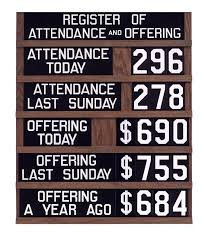
We lived a driveway’s width from the church building where He pastored, and so I grew very accustomed to helping out with service preparation. Anything from unlocking the doors, to straightening the hymnals in the hymnal racks on the back of those long wooden pews, to sliding those cardboard number tiles into the wooden rails on the sign up front so that everyone could see the hymn numbers for that day, the attendance from last week, and the offering amount that had been given.

He would bring me along on countless visits to church members homes (my dad is king of the “pop-in”) where we’d sit and talk about church matters and about life over a cup of coffee he himself most likely made in whatever person’s kitchen he was in.

He would bring me along to drop off that cassette recording of that week’s sermon at the local radio station. There was a sense of awe that my Dad’s preaching would reach beyond the four walls of our modest little church building there on Townbank Road.

He would bring me along to the homes of shut-ins that he’d seek to encourage and keep connected. I recall sitting at the kitchen table of a very, very old woman who had lost her husband and most of her sight as she served us both a piece of pie from her fridge, not able to see the mold that had grown on the pie. I remember my dad graciously trying to honor our hostess by eating as much of the pie as was safe, and encouraging me to be careful as I did the same. (Neither of us suffered any effects of eating that pie, by the way.) She was simply wanting to show us gratitude for the yard work he had done and brought me along for.

He would bring me along to South Cape Nursing Home, where he would conduct a time of worship for the residents there–many left alone and forgotten by their families and society. I remember handing out hymnals to those who could still hold one and whose eyes and/or mind would still let them read. I remember the tinny sound of that upright piano and the way it echoed down the long, dimly-lit, urine-scented corridor of that nursing home. I remember sitting next to Frank, an amputee with a three-tooth grin, hunched over in his wheelchair, listening to my dad give a miniature version of that week’s Sunday morning message.

Over my lifetime, my dad has taught me so many spiritual truths from God’s Word, as well as principles that help shape my understanding of being a disciple of Jesus. One of those statements is “Salvation is free, but from here to eternity it’ll cost you your life.” What a succinct, powerful packaging of words that summarize the entirety of full surrender–the kind of surrender that must follow a confession of faith in Jesus as Savior. It was from my Dad that I learned the inseparability of Jesus as Savior and Jesus as Lord. The expression “If Jesus isn’t Lord OF all, then Jesus isn’t Lord AT all” when it comes to my personal relationship with Him may not have been original to my Dad, but it was something he was faithful to challenge me with. It was from my Dad that I learned about “The Believer and the Sin of Anxiety”, one of his sermons that, for whatever reason, has gotten especially stuck in my mind. That message crafted my understanding of how to live a life free from worry. Can you imagine being equipped as a young person to walk through the rest of your life worry-free? That’s what that message did for me, and I walk that way to this day. I remember my Dad’s teaching on Isaiah’s vision of God in the temple. I wrote about that recently, and you can read just a taste of my understanding of this passage, an understanding that came straight from my Dad’s preaching and teaching of it.

Why am I telling you all this (and believe me, I could pack a 45-minute sermon with the rest of it, and more)? It’s because yesterday marked the end of pastoral ministry for my Dad. After 50 years of pastoring at the local church level, He has retired and is moving into the next chapter of God’s story for his life. And I want you to know that I’m proud to call Ron Varner my Dad.

I feel compelled to pause here and extol the incredible qualities of my Mom, Beverly Varner. You’ve likely heard the expression, “Behind every great man there’s an even greater woman.” Well, that statement is especially true of pastors. No pastor who’s worth their weight would be able to do what they do without the loving, often overlooked support of their spouse. And I know this is true of Ron and Beverly Varner. My Mom has served my Dad just as diligently, faithfully, and beautifully as my Dad has served the local church. There cannot and would not be the impactful ministry of Ron Varner without the ministry of Bev Varner. They have decided from the start to be a team in this ministry; my Dad with all the public parts and my Mom with the mostly silent, unseen parts. One might be tempted to say that it’s the man up front who does the heavy lifting of ministry. That person would be dead wrong. I honor and bless my Mom for her 50 years of sacrifice for the good of the Kingdom and the gospel message being preached, and countless numbers of disciples being equipped to live Godly lives. My Mom’s ministry cannot be overstated. To all the spouses of pastors who might read these words: You are seen, you are loved, you are appreciated, you are so very vitally valuable to the mission of your spouse, and God will reward you Himself for your faithful ministry.

My Dad has been a faithful steward of God’s Word, and as I sat down this morning to listen to his final sermon to those gathered in that church building in North Carolina, so similarly sized to the church building I grew up in, I heard these words spoken after my Dad read that morning passage of scripture from Revelation that he was about to preach on: “And so one more time I say to you, beloved, this is the Word of God.”

“And so one more time…” If I’m not careful, that lump in my throat will turn into tears as I think about what those few words represent. It isn’t merely a pastor in front of his flock for a final sermon. It’s a man at a very distinct juncture in his own life and ministry, boldly proclaiming for “one more time” in the context of that local church the only thing that will stand for as long as the earth stands: the Word of God.

“Beloved…” I’ll confess that over the years my Dad’s overuse of the word “beloved” has become a bit of a running joke. He loves to use that word in reference to God’s people. If you’ve ever heard him preach, you have heard him refer to the Church as “beloved” on multiple occasions in any given sermon. But that is merely a glimpse of his heart for God’s people. He simply wants to remind all of us that “beloved” is what we are in God’s sight. From the youngest to the oldest. From the wealthiest to the most impoverished. From the most influential to the most seemingly insignificant. All people are beloved by God, first by virtue of Him being our Creator, and then even more so by Him being our Redeemer. And my Dad took every opportunity to remind God’s people that they are at the center of God’s heart, eternally beloved.

“This is the Word of God.” I can tell you unequivocally that when the dust settles on a lifetime of ministry, my Dad would only want to have said about him that he faithfully preached God’s Word, in the power of God’s Spirit, for the good of God’s people, and to the glory of God alone.

So while I’m sure that more preaching opportunities await Rev. Ron Varner, his connection to a local congregation and his responsibility to shepherd a specific group of people have now closed. Now, as God guides, he can turn his attention to first enjoying even more time with his bride, then swinging golf clubs, and ministering through providing solid biblical preaching and teaching both online and as guest preaching opportunities arise. (And of course, you’ll also find him frequently fielding questions about the Bible from his son.)

So if you have a pastor, let me encourage you to encourage them. (I totally get that I’m a pastor, so that statement sounds a bit self-serving. Just trust me that it isn’t.) Reach out to them and let them know you’re praying for them. Ask what you can take off their plate. Show up early next time there’s a worship gathering and offer to pray with them before they preach. When a service is over, don’t bolt out the door; stay and fellowship. One of the greatest joys of a pastor isn’t preaching in the spotlight, it’s conversing in the trenches. Invite your pastor to lunch. He probably eats every day, just like you do. Ask him how you can specifically be in prayer for his family. Send a note to the pastor’s spouse. If you love and agree with the vision of that local church, go all in on it. I mean ALL IN. If you don’t love and agree with the vision/direction, find another local church where you can go all in. Your pastor doesn’t want your butt in a seat on Sunday nearly as much as they want your heart handed over to Jesus, to His mission on earth, and to spiritually community where you can thrive and flourish.

I’ll wrap up here with another “attaboy” for Reverend Ron Varner. Well done, Dad. You’ve walked a road few are called to, and even fewer survive, and you’ve done so well.

As he has shared on numerous occasions with me and his congregation, these words borrowed from the plaque on the wall in the barber shop on that Air Force base he grew up on:

“Only one life, ’twill soon be past. Only what’s done for Christ will last.”

Fresh Start(s)

We all have situations, relationships, or even seasons of time of our lives that we’d go back and do differently, if we could. Think about what situation or season that might be for you.

What is it about that situation that you look back on critically that would cause you to question how you handled it? Was it the outcome? Was it your attitude throughout? Is it that you now know things that you didn’t know then and therefore couldn’t act on? Was it something else altogether?

As a follower of Jesus and a pastor to boot, I am pretty consistently haunted (that word sounds ghoulish or negative, but stick with me while I hash it out) by the question: Is what/who the Church is today consistent with the desire of God’s heart for those who represent Him on earth?

I can almost hear you from here. I believe that we would collectively release a resounding “No.” as the Church universal. We all know that who we are and what we’re doing and the silly ways we can get sidetracked, making some non-essentials into the hill(s) we die on–well, it’s embarrassing.

So here at this moment in the history of the Church, we desire to and will, with God’s guidance and power, usher in a new start. And this new start will leave no thing untouched and unaffected, except for the Gospel itself. We step forward with no grip on what was in terms of tradition, preconceptions, personal preferences, or rhythms that at one point started with fervor yet have deteriorated into rote and nearly meaningless religion or even religious monotony.

The prophet Isaiah spoke these words that I fear apply to far too many church-goers: “These people come near to me with their mouth and honor me with their lips, but their hearts are far from me.
Their worship of me is based on merely human rules they have been taught.”
(29:13)

For those who don’t know, just this month I have officially started a new pastoral role at the local church I have served at for over twenty years. Along with being Pastor to Young Adults, I am now also Director of Discipleship. You better believe that the question “Are we even making disciples at all?” is at the top of the long list of questions that I’m asking in this new role.

Lest you think that question is too dire or drips with doubt, let me assure you that the question is exactly as it should be: teetering on the edge of being an indictment. Unless we ask this question as the Church, we are in full danger of neglecting and failing at literally the ONE THING Jesus told us to be about before He ascended into heaven where He, like us, awaits His return.

Just as this question must be asked on a wide-spread level, it must also be asked on the personal level. There will be no greater anguish than for us to reach the end of our time and realize that we completely missed the point. Regardless of the pain involved, we must face the question. I’m doing that in my local ministry context as a pastor, and I’m also doing it in my own heart as a person.

Here’s the rub: Have you ever played “the floor is lava”? It’s a childhood game (there’s actually a television game show for adults based on the same premise) wherein as long as you’re up off the floor, you’re safe. But let one little pinky toe touch the ground, and you’re burned up and out of the game.

In a way, we are all playing this game spiritually. We’re locked in and fearful of moving freely because we have grown so accustomed to what has been that what could be seems more terrifying than exhilarating.

But what would a fresh start in your spiritual walk with Jesus look like? What would cracking open and discarding the shell of religious activity look like? What would introducing zeal and fervor look like? What would a life set ablaze with the power of the Holy Spirit look like? What does a neglect of all silly and shallow distractions in favor of a full-bodied, full-life surrender and pursuit of Kingdom purposes look like? What does a day-to-day existence that embraces and insists on making disciples look like? What does it look like to consider your vocation and career not the point of it all, but the fuel and context in which God is calling you to make more disciples?

God helping me as a person and as a pastor, and God helping us as a local church and as the Church universal, there is a fresh start emerging. We are putting away those stale traditions that have eased us into ambivalence toward the Mission, and we are welcoming God’s refining gaze to guide us into the new approach to disciple-making that our world today calls for.