“Your own, personal Jesus Someone to hear your prayers Someone who cares. Your own, personal Jesus Someone to hear your prayers Someone who’s there.”
If you’re a fan of “the Man In Black”, Johnny Cash, OR if you’re a fellow Gen Xer (like yours truly), you recognize those words from the song “Your Own Personal Jesus”. Released by Depeche Mode in 1989 and then again by Johnny Cash in 2002. More on that in a sec.
In other news, I have to give you an update on my life. This might shock some of you, and for that I’ll just give you a mild “sorry, not sorry.” In all honesty, I’m not sure I ever thought I’d say to you what I’m about to say.
For months and months, my wife has worn and enjoyed a pair of Birkenstock sandals. She swears by them. She loves them. They were always “her thing” and honestly I never considered myself a Birkenstock type of guy. Just not my vibe. No offense to all you hemp-wearing hippies out there. Do your thing. Birkenstocks just weren’t for me. Period.
As we approached my birthday (which happened just a couple of weeks ago), my wife was quietly and gently suggesting and hinting that maybe I might want to rethink my staunch stance on these sandals, beloved by millions. She was convinced that once I just tried them, I’d change my tune. Long story short, I’m sitting here at my laptop that’s sitting on a cafe table, and just under that table on my two feet are…you guessed it…
I’ve come to realize that Birkenstocks really are a great shoe. As I’ve been told, the longer I wear them, the more comfortable they’ll become. Apparently, the unique corky material used in the footbed will slowly morph itself to the shape of my foot. The more I walk, the better they fit.
David invites us with these words in Psalm 34:8:
“Taste and see that the Lord is good; blessed is the one who takes refuge in him.”
Every faith story begins with a willingness to taste. For some, that taste is taken at the bottom of life’s proverbial barrel, at rock bottom, when there are no other options left. For others, that taste is taken when life is going just fine, but there’s still an empty ache that persists within us. For some, the taste is taken after tasting of the world and the world’s ways and metrics of success have been tasted and found at first sweet, but afterwards leaves a deep, bitter aftertaste that simply won’t do. Regardless of who you are, the invitation is the same: Taste & See. The imperative connotation David gives us is that if you taste, you’ll see that, in fact, “the Lord is good.”
The longer I walk with Jesus, the more Jesus becomes so very personal to me. He’s not merely King, Messiah, Savior, “Darling of Heaven”, and Supreme Authority, though he is most definitely all those things. He’s also my greatest friend, my closest ally, my solid ground, and the One to whom I can (and do) take every topic, every question, every pain, every frustration, every joy, and every experience I have. There is nothing this personal Jesus isn’t personally involved with in my life. I’ve tasted and I’ve seen that He’s good.
Have you tasted and seen the same?
If you haven’t tasted and seen that the Lord Jesus is good, let me echo David’s invitation to you today, thousands of years after it was originally recorded. Taste Him. You’ll see.
I’m not pushing religion here. I’m not asking you to join a club. I’m not saying meet me at church this Sunday. I’m saying right where you are, right how you are, in whatever condition your life is in right now, and for whatever reasons you haven’t tasted and seen up to this point. Just taste, and you’ll see.
Tell me you’ve tasted and haven’t seen that He’s good. I’d love to hear those stories. I’d love for you to reach out if you’ve actually tasted who Jesus truly is, and have found Him to be NOT good. Please reach out. Email me. Call me up. Leave a comment below. I’m not gonna argue with you. I really just want to hear your story.
Tell me if you’ve tasted and found Jesus to be good. Leave me a note in the comments and testify to the goodness of God. I’d love to gather as many people as possible who read these words to simply drop a statement so that others can see that you’ve tasted and seen that Jesus is good. That you’ve tried Him and found that He’s not only the centerpiece of time and eternity, but He’s a personal friend in whom you’ve placed your form-fitted faith.
I was driving in my car this morning after having just dropped my son off at work, and was listening to Shane & Shane’s rendition of “Worthy of it All” when a thought struck me. I’ve got tons to get done today, but I wanted to get some thoughts down before I get to those things because I think there’s something here…well….worthy of some wrestling and articulating.
In the song I just mentioned, the lyrics are borrowed from the apostle Paul’s letter to the Church in Rome. Read Romans 11:36. The song lyrics I want to focus on are: “You are worthy of it all…You are worthy of it all…for from You are all things, and to You are all things…You deserve the glory.”
It struck me that all of our ills, woes, issues, and dilemmas have some (or all) of their roots in this very issue: Worthiness. The scene described in the song, borrowed from John’s vision of God’s throne found in the book of Revelation, is one of utter weightlessness in view of the majesty and power of the One on the throne. It seems to me, dear friends, that we hold off on reckoning the worthiness of God until some later, future date and time. We view that throne scene as some “I can’t wait to get there and see that”, all the while the scene is present tense, and contemporary with wherever you are and whatever you are facing, right now.
Our failure to acknowledge the worthiness of God of our praise, our attention, our affection, and our surrender has a direct impact on the weight we carry (needlessly) on our own shoulders. When we extol the King as worthy, we acknowledge His power, and hoist our cares onto those shoulders and into that great, unfathomable power. From Him are all things, and for Him are all things, and to Him all things will return. Translation: None of this is yours or mine to bear alone. None of the struggles you’re facing right now actually belong to you. When you confess the worthiness of God by virtue of His power, you relieve yourself of the nonsensical need to carry anything in your own power.
There’s a weightlessness that awaits you, and I’d dare say its moments away from this moment. Because if God truly “deserves the glory”, then He must also be worthy of the weight of that glory. Let me put it bluntly: For you to hold on to the weight you carry is to say that God is not worthy of it. And to withhold the weight of your woes is to stop short of worship.
So let me ask you this: Do you view God as worthy of your worship? Is He to you what He declares He is to all? Do you truly believe that from Him, and for Him, and to Him are all things, even the things you hold in your heart, mind, and hands?
If you view God as worthy of your worship, it makes zero sense that you would withhold anything from Him, especially those things that would weigh you down today.
“For from him and through him and for him are all things. To him be the glory forever! Amen.”
Romans 11:36
Whenever the living creatures give glory, honor and thanks to him who sits on the throne and who lives for ever and ever,the twenty-four elders fall down before him who sits on the throne and worship him who lives for ever and ever. They lay their crowns before the throne and say:
“You are worthy, our Lord and God, to receive glory and honor and power, for you created all things, and by your will they were created and have their being.”
Rev. 4:9-11
And if you aren’t familiar with the song, let me introduce you to it…
I want to share something with you that brings me a tremendous amount of joy.
Years ago, I began to imagine what it would look like to see local churches in our area united in worship. Each church has its own place, of course–its own flavor, style, vibe, traditions, and all the unique qualities each local church has–but what if we were to intentionally decide to gather for the sole purpose of worshiping Jesus in the kind of unity that He desires? That He Himself prayed for?
What might that look like?
I know this is not a new concept. Unity among the Church has been an issue pretty much since the Church began. But when we catch glimpses of that unity, I believe we are catching glimpses of heaven itself.
At about the same time as I was envisioning this type of unity, a woman in my local church connected with me, and I learned quickly that she had the same vision and desire. She, too, wanted to see times of gathering for Jesus’ followers in our local geographical area, and we both wanted to focus those gatherings on connecting young people.
So we reached out to local ministry leaders/pastors and began a journey that led us to what is now known as “RVA NOW” (The “NOW” is short for “Night of Worship”). The concept is simple to explain but not as simple to execute: Bring together musicians, vocalists, worship leaders from a variety of local churches, and have them collaborate where no one claims to be “in charge.” Each servant submitted to the leadership of God while they cooperated together in leading those gathered in authentic, unified worship.
Last night was our most recent RVA NOW, and it was, in a word, glorious. Can you imagine a crowd of young adults, some teenagers, and a few older adults (because all are welcome) gathered together in unity under the banner of Jesus? No denominational banners, no local church banners, no theological banners. Just the banner of King Jesus.
I had the privilege last night of sharing a word of welcome to all those gathered to worship. I shared from my heart that we had gathered for two things: First of course, to worship Jesus. But also to build unity among local churches. I asked, “What if our best worship has nothing to do with the song list? What if our best worship has nothing to do with the experience here tonight, or how loud we sing? What if the highest praise we can give Jesus is a unified bride?”
Believe me, I understand theological, doctrinal, and even denominational differences. I grew up in the local church and know all too well the things that can separate us. I’d even call some of them worthwhile conversations and important distinctions. But the central question whose answer unites us is this: “Who is Jesus to me?” If I asked you, “Who is Jesus to you?”, what would your response be?
Those who claim Jesus as their Savior and Lord are those He Himself calls His Bride. And Jesus has much to say about what He expects and desires of His Bride. The keystone desire of Jesus’ heart in terms of us, His Bride is found in Jesus’ high priestly prayer, specfically in John 17:21:
“I pray that they will all be one, just as you and I are one—as you are in me, Father, and I am in you. And may they be in us so that the world will believe you sent me.”
There’s a simple life principle I’ve learned in my years on earth so far: What grows is what’s watered. RVA NOW seeks to water unity among believers; the very unity Jesus prayed for. And little by little, that sprout has broken the surface and is slowly reaching its way heavenward as it grows.
If you live in the Chesterfield, Virginia area and would like to know when the next RVA NOW is happening, simply follow @rvanightofworship on Instagram. There, you can stay informed about upcoming ways to unite the body of Christ in our area, and join in as we prepare to present to the Groom His Unified Bride.
I’ve got to admit something openly. It isn’t easy, but I know it’ll be healing for me and maybe helpful for you. Here goes.
I do not always assume that God is working.
There. I said it. It’s out there now. You just read those words. If you’re feeling some kind of “That’s it?” feeling, let me assure you that I realize you maybe thought I was divulging a skeleton from a dark corner of some closet of my past. Believe it or not, I just did.
For most of my life, I have operated under the assumption that even while I may claim belief in God, and even follow Jesus, and even worship Him regularly, and even gather with other followers of Jesus, and even pray…I have not operated under the continual assumption that He is working. I would say that most of my journey of following Jesus has been akin to seeing a cardinal zip across the blue midday sky; an occasional occurrence marked by wonder but seemingly over as quickly as it began. Until it came around again. Until then, keep trucking. Buy groceries. Brush teeth. Pay bills. Cut the grass. Just…you know…life.
My heart assumed that God showed up and did His God thing sporadically, inconsistently, and, dare I say, haphazardly. You ever watch a night sky with a friend and they yell out, “OH! I shooting star! That was so cool!!! Did you see that?!?” No. You didn’t. Just a *fffttt* and it was gone.
My mind assumed that if I laid all the pieces of surrender and obedience just so, if I plugged all the variables into the equation in just the right way, I could have more of these red cardinal, shooting star sightings. The danger there is that that’s partly true so we think it’s always true. And when we think we’ve nailed the equation and God doesn’t show up…well….that’s a faith-shaker. Basing God’s spiritual prerogative on my spiritual performance is never a good idea. Some of my fellow Gen-X’rs remember the game “Perfection”. Get all the pieces in before the timer runs out. Spiritually speaking, that’s the anxiety that kind of assumption produces (and don’t even get me started on Superfection)!
So here’s what I’m doing. If it helps you, great. If it doesn’t, just know you’re further along than I am.
I’ve changed my assumption from “maybe God will show up today” to “I will see God working today. Not because I say so, but because He is, and I have the choice either to see it or not.”
Now I’m finding God in every conversation, every situation. I’m seeing God work through others for my sake and even through me for the sake of others. Here’s the kicker: God hasn’t changed anything. I’ve changed my assumption about Him; how and when He moves and works. It’s gone from “occasionally” to “now” and “always”.
The safest assumption you can make in your relationship with God is that He is not merely somewhere nearby or that He might possibly pass by like some rare bird, but that in every moment you’re living, there is a true volatility of His Spirit. There is a moving, a happening, a level of activity that clearly indicates His character and His willingness to reveal Himself to you, to me, to us.
When I was kid, my mom would make homemade Play-Doh. You remember Play-Doh, right? It came in bright yellow buckets, and if you were super fancy, you also bought different playsets that did different things with your Play-Doh. The barber shop, the McDonald’s licensed playset, and the “Doctor Drill ‘n Fill” playsets were super popular.
But my magical mom knew how to make her own. I don’t know what was in that stuff, but as I think about those memories, the smell of it returns in a palpable way to my nostrils. Crazy how that works.
I’m not sure why she didn’t just buy Play-Doh at the store, but I’d guess it was cheaper to make our own. I remember I always struggled to have patience while the clay cooled, so I could play with it without getting third-degree burns.
I do recall that there were more than a couple of occasions where I would be playing with the homemade version of our Play-Doh and I’d get distracted by some other thing, probably Tom & Jerry or He-Man. Or maybe my Legos were calling me. And I’d leave my squishy clay out on the kitchen table.
Whatever shape your spiritual life and health are in right now, it is how you last touched it. Whatever condition your faith currently exists in, it is a direct result of what you have done with it–for better or for worse.
Can I ask you to stop whatever you’re doing right now–whatever episode of Tom & Jerry your heart is distracted by, or whatever pain your life circumstances have handed you, or whatever bitterness has developed because of that wrong you feel has been done to you–and simply return to the kitchen table and sink your hands into an actual conversation with Jesus?
If you don’t, that clay will harden. It will stay in the shape it is currently in and the work of reshaping it will become more difficult the longer it sits. How fresh is your faith right now? How much time has passed since you’ve obediently sculpted it with God’s Spirit playing alongside you?
If you have found your heart and faith have hardened like that lump of clay, simply invite God’s renewing Spirit to breathe new life into your mind and heart right now. It isn’t a chore for Him; it would be His joy to rekindle that conversation and soften that lump of clay, so that you can continue to grow.
Jesus, I return my heart and my affection to you. I come back to the place where I loved you most. I acknowledge that lesser things have pulled me away, and I’ve allowed that to happen. But in this moment, I want to return to you, my first love. Thank you for love that forever welcomes me back. Amen.
I looked up a recipe for homemade Play-Doh, in case you’ve never experienced it, or if you have and just want to rekindle some memories. While you do, spend time talking with Jesus.
1 cup plain flour. 1 cup water. ½ cup cooking salt. 1 tablespoon cream of tartar* …
Mix the flour, water, salt and cream of tartar in a saucepan over medium heat until thick. Allow the mixture to cool and then add the oil. Knead well over a floured cutting board. …
I’m writing this blog post in an attempt (futile as it will most assuredly be) to honor the man who has shaped my understanding of scripture more than any other person has. My dad has been my pastor for my entire life, and growing up in the home of a preacher is–well–a unique experience to say the very least. (Speaking of saying the very least, I chuckle at comments about preachers preaching too long. I grew up in a church where the average sermon was 45 minutes long.)
Ronald Earl Varner began his pastoral ministry at the age of 30, in North Carolina at Davis Grove Baptist Church. Yours truly was but a wee lad, with foggy memories of that time. When I was between Kindergarten and first grade, my family moved from North Carolina to New Jersey; quite a culture shift. I vividly remember walking several feet behind my parents on the sidewalk outside my elementary school, where I had just been withdrawn as a student as we prepared to move to NJ, tears rolling down my Kindergarten cheeks. It was my first taste of sacrifice as a son of a preacher man.
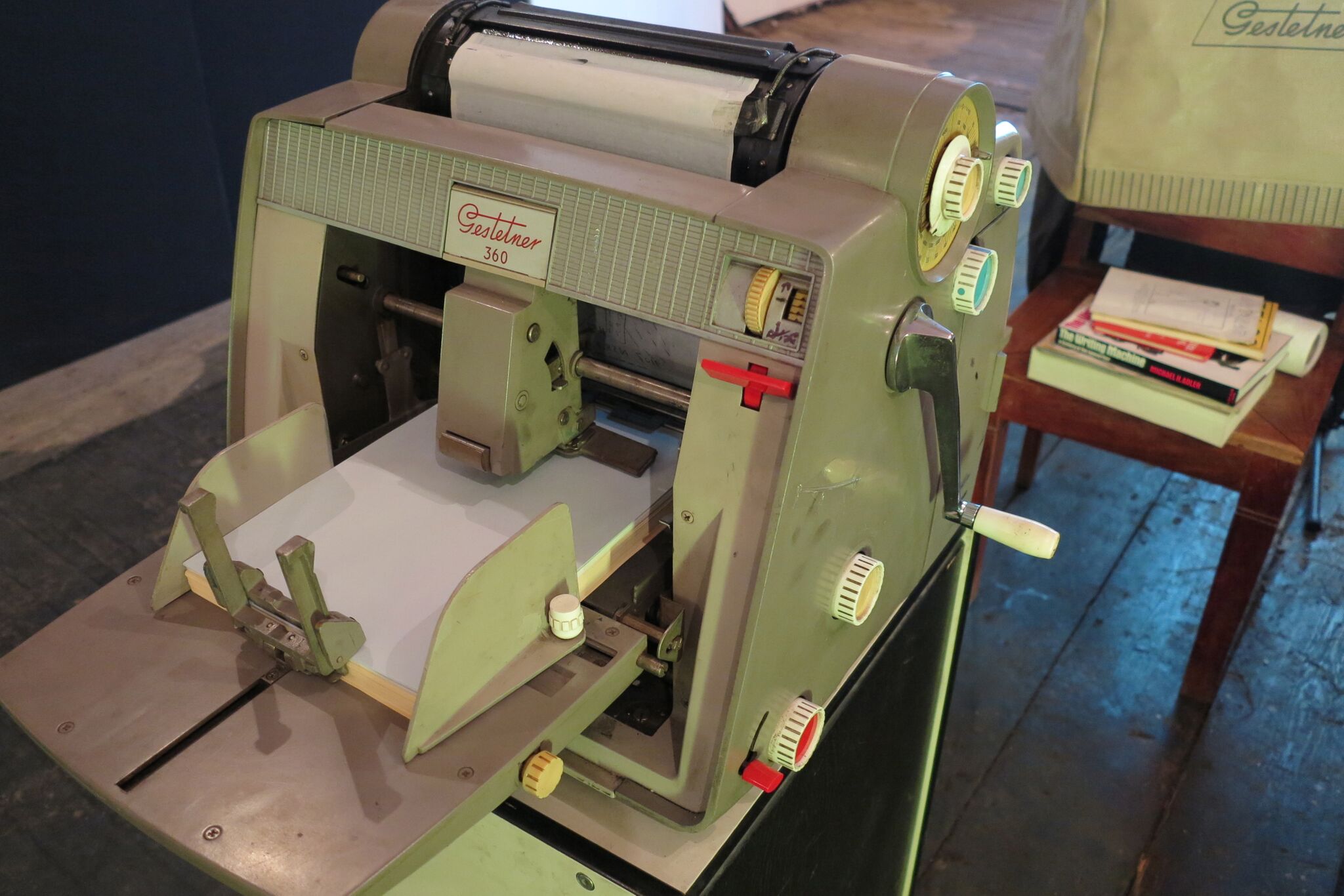
Some of my first memories of helping my dad as he pastored South Jersey Baptist Church in North Cape May, NJ, were being in his small study in the lower level of the parsonage in which we lived, and standing next to a mimeograph machine. My dad would load up the original on that weird type of paper, make sure there was ink in the drum, and then I’d begin to crank that handle like a circus monkey, pumping out the bulletins for the next Sunday’s worship service. I can still smell that ink; one type from the typewriter and another type from the mimeograph. In my mind right now, I can hear the sound of that ta-dum, ta-dum, ta-dum, ta-dum, ta-dum as freshly printed bulletins were imprinted with that week’s hymn numbers, prayer requests, and sermon title.
My dad has always been a servant of the Church. His faithfulness to preparation, diligent study, and exposition of God’s Word is what I’d dare stand at the core of the legacy he has created throughout his pastoral ministry. But not only has he been faithful to “preach the Word, in season and out of season” as Paul admonished Timothy to do in 2 Timothy 4:2, but he also layered a level of comfort and friendliness into his ministry to others. My dad was never “too good” for anyone or too busy to help someone who might have a need.
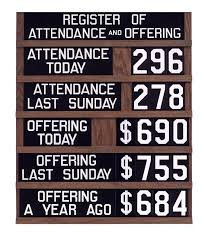
We lived a driveway’s width from the church building where He pastored, and so I grew very accustomed to helping out with service preparation. Anything from unlocking the doors, to straightening the hymnals in the hymnal racks on the back of those long wooden pews, to sliding those cardboard number tiles into the wooden rails on the sign up front so that everyone could see the hymn numbers for that day, the attendance from last week, and the offering amount that had been given.
He would bring me along on countless visits to church members homes (my dad is king of the “pop-in”) where we’d sit and talk about church matters and about life over a cup of coffee he himself most likely made in whatever person’s kitchen he was in.
He would bring me along to drop off that cassette recording of that week’s sermon at the local radio station. There was a sense of awe that my Dad’s preaching would reach beyond the four walls of our modest little church building there on Townbank Road.
He would bring me along to the homes of shut-ins that he’d seek to encourage and keep connected. I recall sitting at the kitchen table of a very, very old woman who had lost her husband and most of her sight as she served us both a piece of pie from her fridge, not able to see the mold that had grown on the pie. I remember my dad graciously trying to honor our hostess by eating as much of the pie as was safe, and encouraging me to be careful as I did the same. (Neither of us suffered any effects of eating that pie, by the way.) She was simply wanting to show us gratitude for the yard work he had done and brought me along for.
He would bring me along to South Cape Nursing Home, where he would conduct a time of worship for the residents there–many left alone and forgotten by their families and society. I remember handing out hymnals to those who could still hold one and whose eyes and/or mind would still let them read. I remember the tinny sound of that upright piano and the way it echoed down the long, dimly-lit, urine-scented corridor of that nursing home. I remember sitting next to Frank, an amputee with a three-tooth grin, hunched over in his wheelchair, listening to my dad give a miniature version of that week’s Sunday morning message.
Over my lifetime, my dad has taught me so many spiritual truths from God’s Word, as well as principles that help shape my understanding of being a disciple of Jesus. One of those statements is “Salvation is free, but from here to eternity it’ll cost you your life.” What a succinct, powerful packaging of words that summarize the entirety of full surrender–the kind of surrender that must follow a confession of faith in Jesus as Savior. It was from my Dad that I learned the inseparability of Jesus as Savior and Jesus as Lord. The expression “If Jesus isn’t Lord OF all, then Jesus isn’t Lord AT all” when it comes to my personal relationship with Him may not have been original to my Dad, but it was something he was faithful to challenge me with. It was from my Dad that I learned about “The Believer and the Sin of Anxiety”, one of his sermons that, for whatever reason, has gotten especially stuck in my mind. That message crafted my understanding of how to live a life free from worry. Can you imagine being equipped as a young person to walk through the rest of your life worry-free? That’s what that message did for me, and I walk that way to this day. I remember my Dad’s teaching on Isaiah’s vision of God in the temple. I wrote about that recently, and you can read just a taste of my understanding of this passage, an understanding that came straight from my Dad’s preaching and teaching of it.
Why am I telling you all this (and believe me, I could pack a 45-minute sermon with the rest of it, and more)? It’s because yesterday marked the end of pastoral ministry for my Dad. After 50 years of pastoring at the local church level, He has retired and is moving into the next chapter of God’s story for his life. And I want you to know that I’m proud to call Ron Varner my Dad.
I feel compelled to pause here and extol the incredible qualities of my Mom, Beverly Varner. You’ve likely heard the expression, “Behind every great man there’s an even greater woman.” Well, that statement is especially true of pastors. No pastor who’s worth their weight would be able to do what they do without the loving, often overlooked support of their spouse. And I know this is true of Ron and Beverly Varner. My Mom has served my Dad just as diligently, faithfully, and beautifully as my Dad has served the local church. There cannot and would not be the impactful ministry of Ron Varner without the ministry of Bev Varner. They have decided from the start to be a team in this ministry; my Dad with all the public parts and my Mom with the mostly silent, unseen parts. One might be tempted to say that it’s the man up front who does the heavy lifting of ministry. That person would be dead wrong. I honor and bless my Mom for her 50 years of sacrifice for the good of the Kingdom and the gospel message being preached, and countless numbers of disciples being equipped to live Godly lives. My Mom’s ministry cannot be overstated. To all the spouses of pastors who might read these words: You are seen, you are loved, you are appreciated, you are so very vitally valuable to the mission of your spouse, and God will reward you Himself for your faithful ministry.
My Dad has been a faithful steward of God’s Word, and as I sat down this morning to listen to his final sermon to those gathered in that church building in North Carolina, so similarly sized to the church building I grew up in, I heard these words spoken after my Dad read that morning passage of scripture from Revelation that he was about to preach on: “And so one more time I say to you, beloved, this is the Word of God.”
“And so one more time…” If I’m not careful, that lump in my throat will turn into tears as I think about what those few words represent. It isn’t merely a pastor in front of his flock for a final sermon. It’s a man at a very distinct juncture in his own life and ministry, boldly proclaiming for “one more time” in the context of that local church the only thing that will stand for as long as the earth stands: the Word of God.
“Beloved…” I’ll confess that over the years my Dad’s overuse of the word “beloved” has become a bit of a running joke. He loves to use that word in reference to God’s people. If you’ve ever heard him preach, you have heard him refer to the Church as “beloved” on multiple occasions in any given sermon. But that is merely a glimpse of his heart for God’s people. He simply wants to remind all of us that “beloved” is what we are in God’s sight. From the youngest to the oldest. From the wealthiest to the most impoverished. From the most influential to the most seemingly insignificant. All people are beloved by God, first by virtue of Him being our Creator, and then even more so by Him being our Redeemer. And my Dad took every opportunity to remind God’s people that they are at the center of God’s heart, eternally beloved.
“This is the Word of God.” I can tell you unequivocally that when the dust settles on a lifetime of ministry, my Dad would only want to have said about him that he faithfully preached God’s Word, in the power of God’s Spirit, for the good of God’s people, and to the glory of God alone.
So while I’m sure that more preaching opportunities await Rev. Ron Varner, his connection to a local congregation and his responsibility to shepherd a specific group of people have now closed. Now, as God guides, he can turn his attention to first enjoying even more time with his bride, then swinging golf clubs, and ministering through providing solid biblical preaching and teaching both online and as guest preaching opportunities arise. (And of course, you’ll also find him frequently fielding questions about the Bible from his son.)
So if you have a pastor, let me encourage you to encourage them. (I totally get that I’m a pastor, so that statement sounds a bit self-serving. Just trust me that it isn’t.) Reach out to them and let them know you’re praying for them. Ask what you can take off their plate. Show up early next time there’s a worship gathering and offer to pray with them before they preach. When a service is over, don’t bolt out the door; stay and fellowship. One of the greatest joys of a pastor isn’t preaching in the spotlight, it’s conversing in the trenches. Invite your pastor to lunch. He probably eats every day, just like you do. Ask him how you can specifically be in prayer for his family. Send a note to the pastor’s spouse. If you love and agree with the vision of that local church, go all in on it. I mean ALL IN. If you don’t love and agree with the vision/direction, find another local church where you can go all in. Your pastor doesn’t want your butt in a seat on Sunday nearly as much as they want your heart handed over to Jesus, to His mission on earth, and to spiritually community where you can thrive and flourish.
I’ll wrap up here with another “attaboy” for Reverend Ron Varner. Well done, Dad. You’ve walked a road few are called to, and even fewer survive, and you’ve done so well.
As he has shared on numerous occasions with me and his congregation, these words borrowed from the plaque on the wall in the barber shop on that Air Force base he grew up on:
“Only one life, ’twill soon be past. Only what’s done for Christ will last.”
What thing, quality, or experience–if added to your life–do you strongly suspect would enhance it greatly? We’ve all likely been prone to the regularly occuring daydream where we think “If only I had ______…” or “If only I did _____ for a living, then I’d be….” or “If I could just get to _______, I know I’d feel so much happier, more fulfilled, and content.”
I want to ask you specifically to think about that thought:
What thing, quality, or experience–if added to your life–do you strongly suspect would enhance it greatly? Use the comment section below to share your answer. Or find me on social media and send me a DM. Or if you’ve got my number, text or call me. Yes, really.
This isn’t an exercise in discontentment, and I’m not trying to stir up some angst within you, forcing you to focus on and gripe about what isn’t there. This is more of an exercise in capturing (or at least spotting) the elusive bird called aspiration. Why? Because in our typical work-a-day lives, we can sometimes lose sight of what it means to dream, to plan, to move, to morph, to advance, to attain what seems good to us.
And let me be clear: wanting is not a sin. I have a long list of wants. Here are a few:
I want all my children to know, adore, and follow Jesus– not because my wife and I do, but because a living, vibrant love relationship with Christ is the only solid ground that exists in this world. I want my wife to never doubt that she married a man who thinks of her continually, and can’t wait to see her again. I want to see the Church live out its Commission in the power of the unexplainable Holy Spirit so that the whole world gets a better view of grace than we have given it. I want to commute to work on a Vespa GTS 310 or a Honda X-ADV scooter. I want to hike Ireland with my wife. I want young people to boldly take their place in this unique piece of history in God’s story of humanity. I want to win Chipotle for life. I want more land and a bigger house, so my future grandkids can build sweet memories of going there to catch frogs, wrestle goats, eat ice cream, and find joy. I want to be a wildly friendly person. I want French fries from Dante’s on Ironbridge Road. I want lower cholesterol (And yes, I see the connection). I want Post to bring back Maple Pecan Crunch cereal (believe me, I’ve asked). I want clean water for every person in the world. I want pastors who seem to revel in celebrity status to pack it up and do something else. I want us as a human race to slow our roll on AI. I want New York bagels to be available in central VA (Cupertino’s is closest, in my opinion). I want to better understand anxiety and depression so I can better connect with those who struggle daily. I want 7-11 to finally figure out how to do a sweet tea Slurpee. It seems so doable. I want more wealthy people to be more generous, and I want more impoverished people to find their way out of poverty. I want to understand why so many of my wants seem to gravitate to food and drink. I guess more than anything, I want Jesus to make good on His promise to return for His bride.
No, wants aren’t bad. Wants we have that either stand opposed to God’s wants or pull us away from intimacy with Jesus are what’s bad. Jesus speaks extensively in the gospels, and Paul speaks at length in his letters about managing our desires and aligning with God’s desires for us (which, by definition, are far better anyway). If you want to read more about those, here are some passages for you:
Matthew 6:24
Matthew 10:33
Matthew 20:26-28
Matthew 23:11-12
John 5:44
Romans 8:7
Ephesians 5:8-10
Philippians 2:3
1 Thessalonians 4:11
So what would you like to add to your life right now, if you could? And being as objective as possible, what would be the logical conclusion to getting that want?
Here’s my working theory: The best additives (things we seek to add to our lives) are also the best preservatives (those things that uphold and protect the most important relationships in our lives). If you have (or attain) a want but the expense of the want is the erosion of a relationship, you had a bad want.
Likewise, if your main aim is to simply preserve what you are and what you have, you’re going to forfeit your ambition for some (or all) of your wants. Some Christians seem to operate this way. They live in a perpetual circling of the wagons in an effort to simply hold on to some illusion that things are now as they used to be.
Lord, help us to be a people driven by the mission you gave us: To love people in a way that simply points them to Your love so that the gift of salvation is the message of our lives. And while we do, help us to navigate and when necessary, surrender the things that would get in the way of our closeness with You. Give us grace to interact with others so that Your grace is clearly reflected. Protect us from attitudes that are not fueled by Your Holy Spirit. Make Your Church a unified Bride, busy at the work you’ve given us to do. We temper our wants and submit them to You. Sanctify us wholly. Amen.






 jerrythinks.